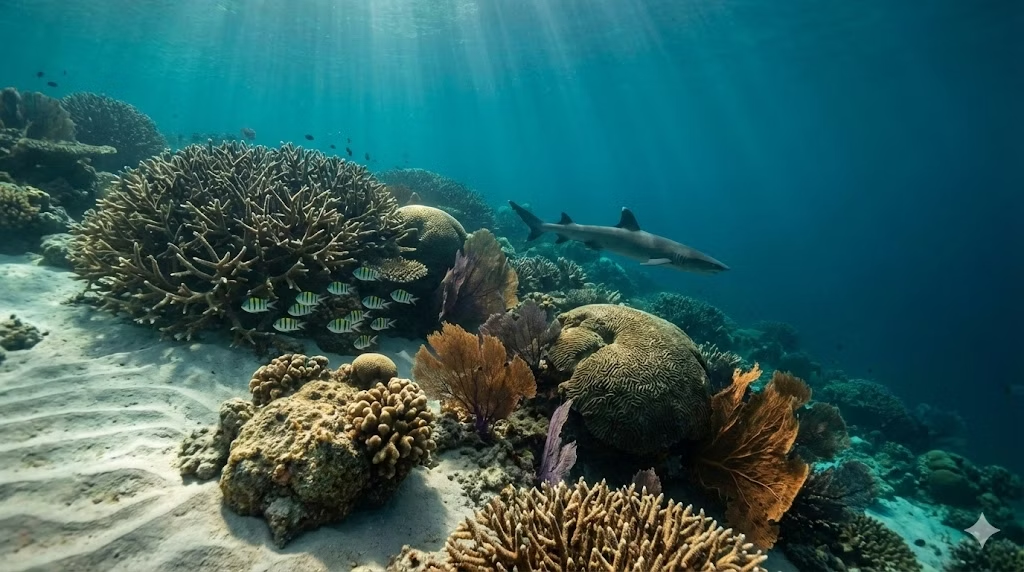
Lembongan Bay dive site

Nusa Lembongan

Lembongan Bay Diving

Normally a slow, controlled shallow dive around separated coral bommies. The guide adjusts the route for swell, visibility, training activity, pontoons and boat traffic.

Depth range
3–12 m
Access
Boat
Environment
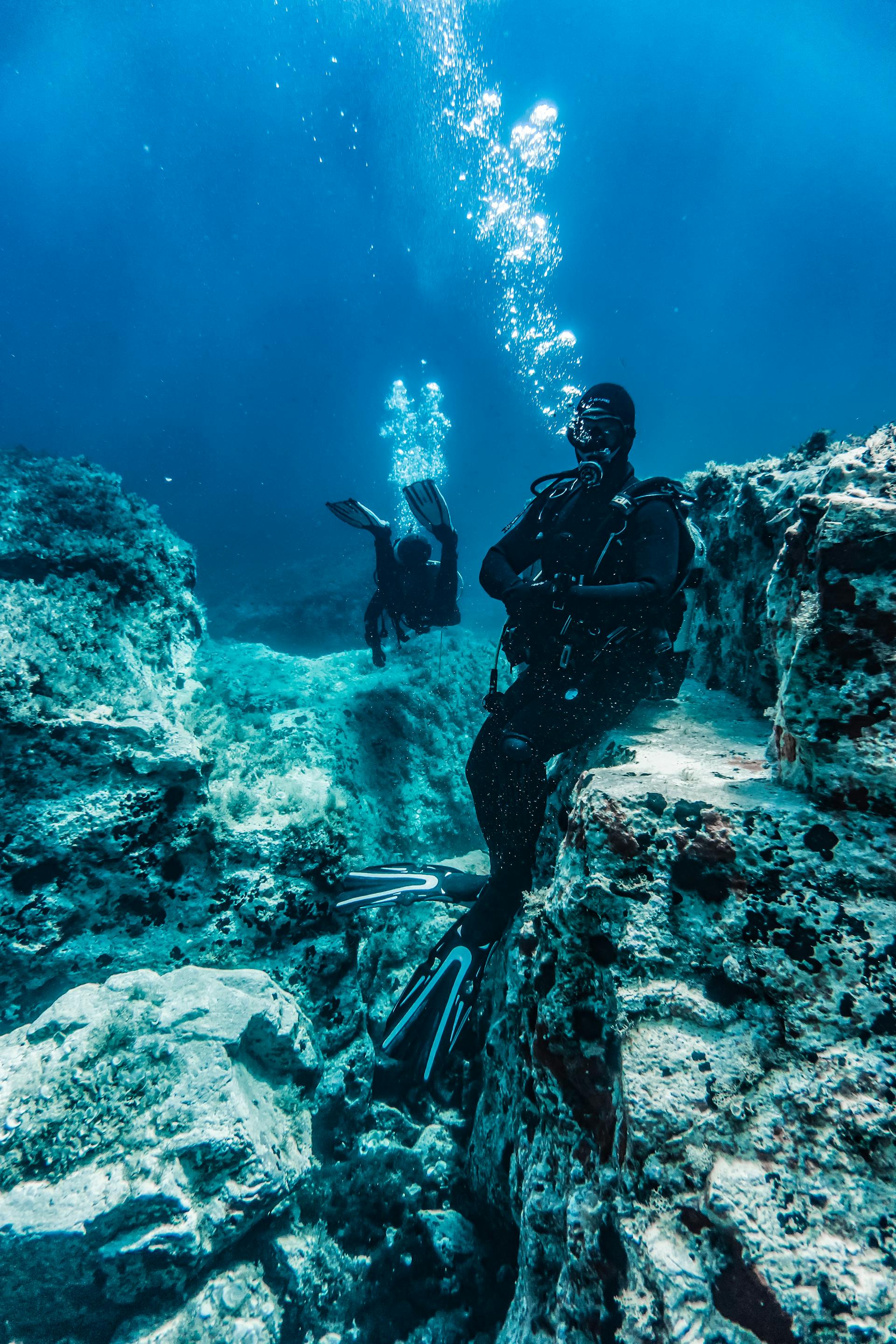
Sheltered shallow bay, sandy bottom, coral bommies and rocky outcrops
Experience level
Beginner

About Lembongan Bay

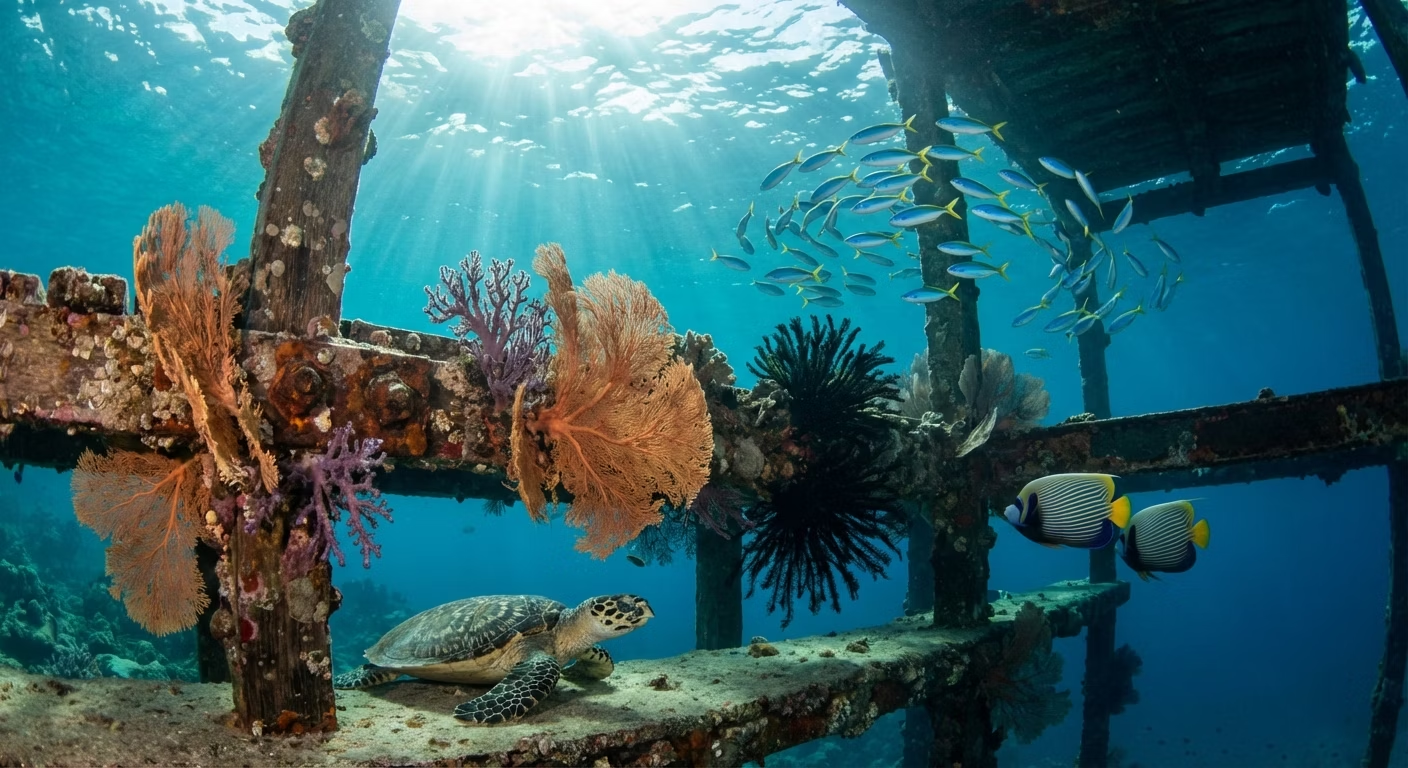
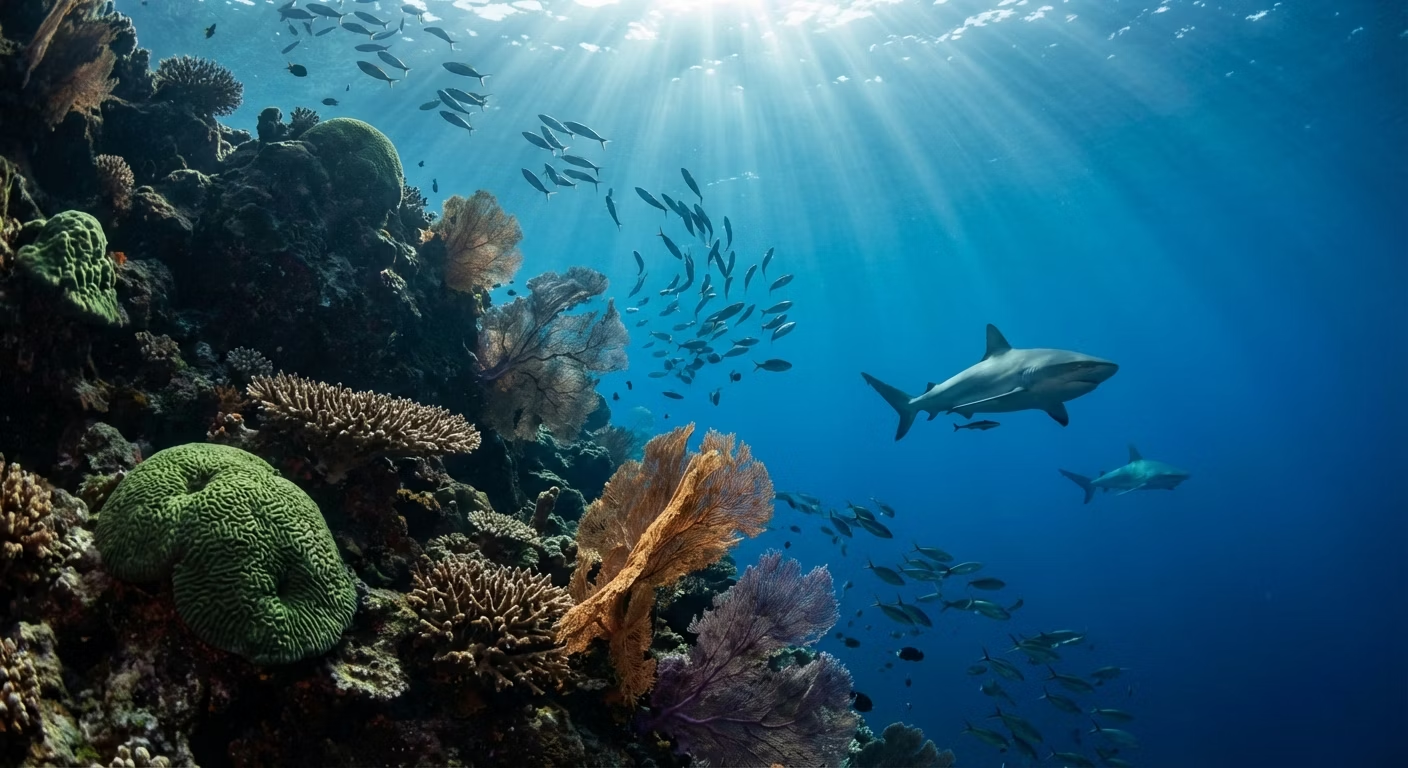
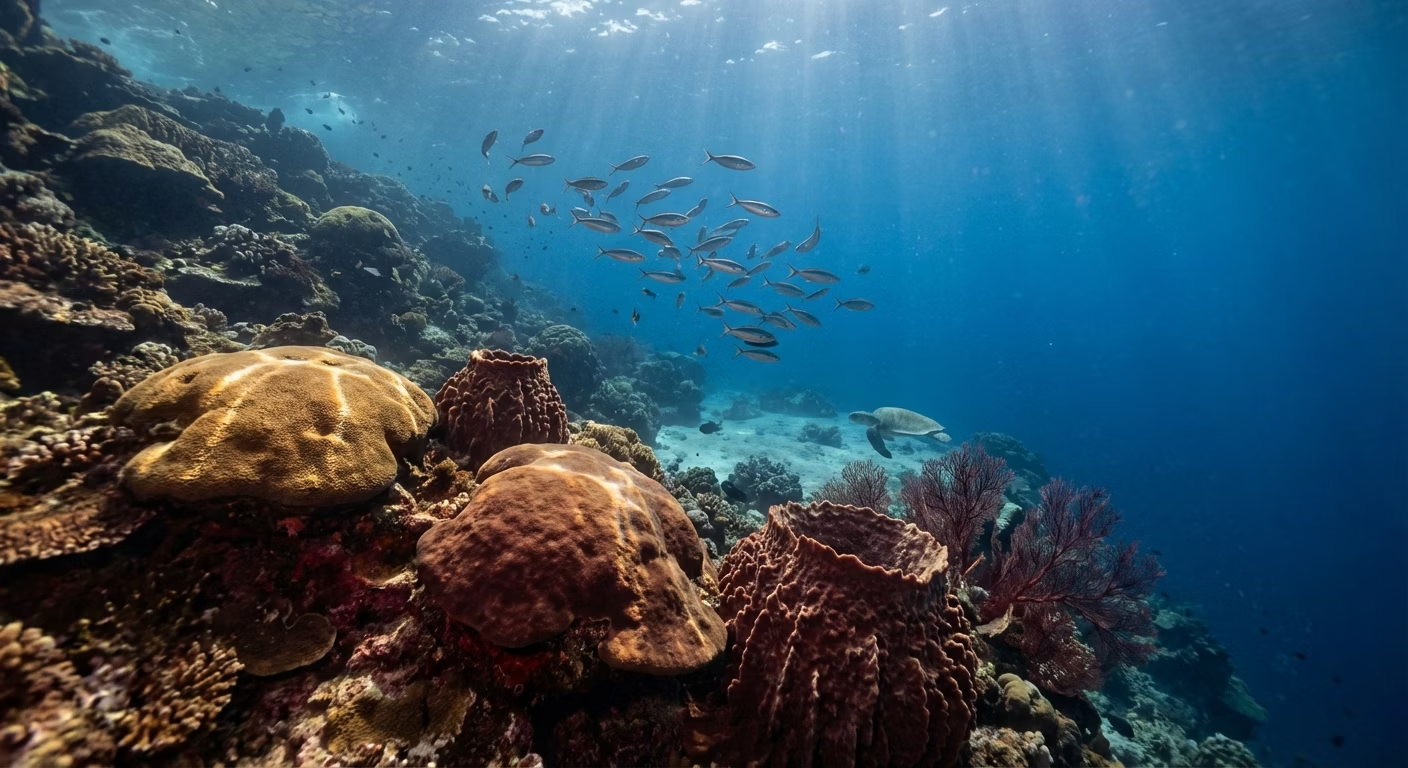
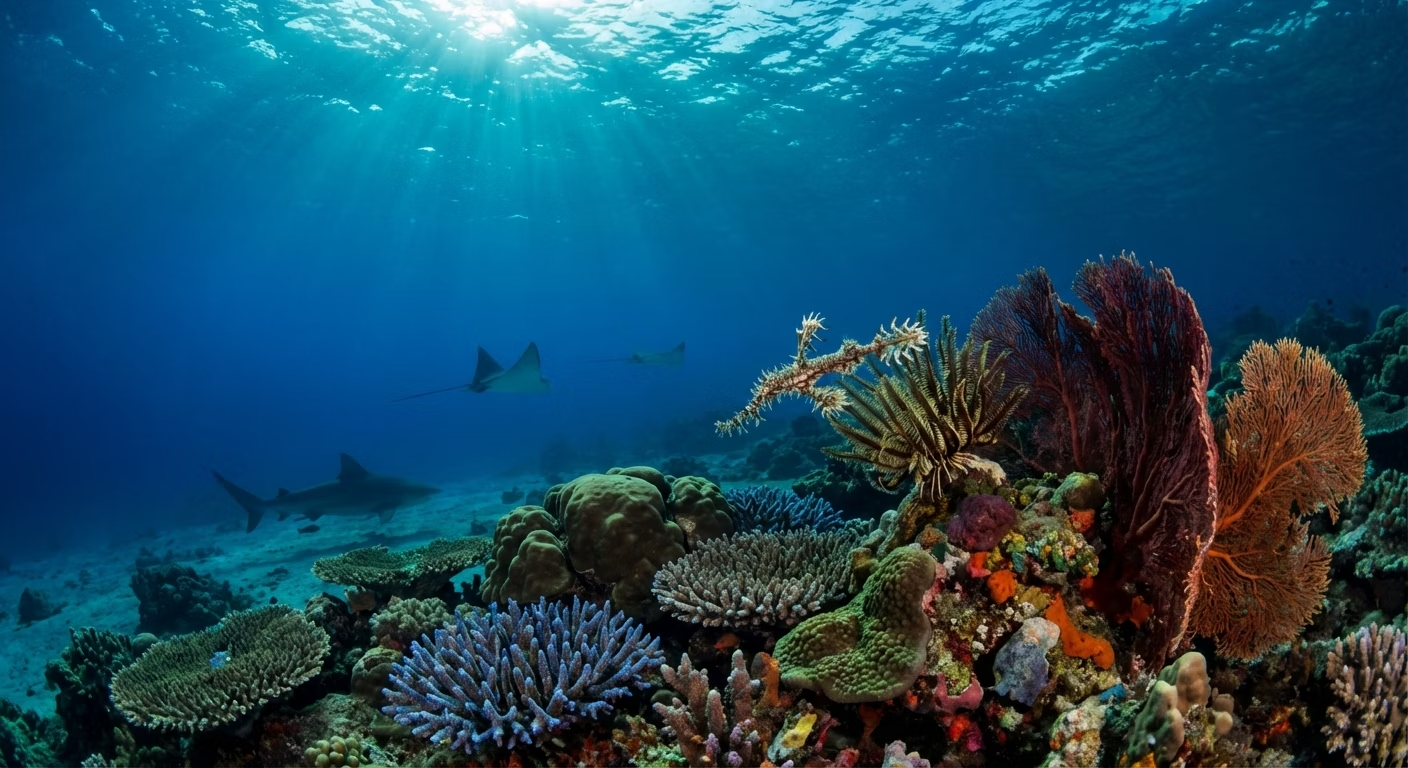
Lembongan Bay is a shallow, sheltered dive area off Jungut Batu with a white-sand bottom, coral bommies and rocky outcrops. Its simple topography and normally gentle conditions make it useful for beginner, training, check and relaxed macro dives, although swell, visibility, pontoons and local boat traffic must still be assessed on the day.

Availability notice

Training, snorkeling and night-diving use depends on swell, visibility and bay traffic on the day.

Site highlights

  • Shallow 3–12 m profile suitable for training and relaxed dives
  • White sand that highlights colourful coral bommies
  • Good variety of small reef fish and macro subjects
  • Short boat ride from local Lembongan operators
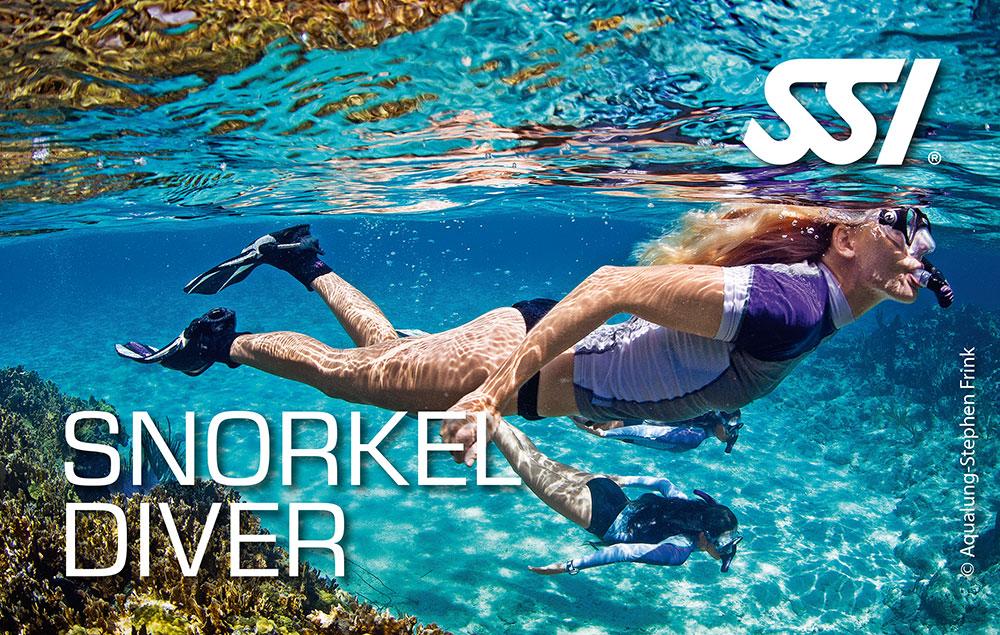
  • Possible snorkeling and night-diving use when conditions allow

Before you dive

Recommended certification

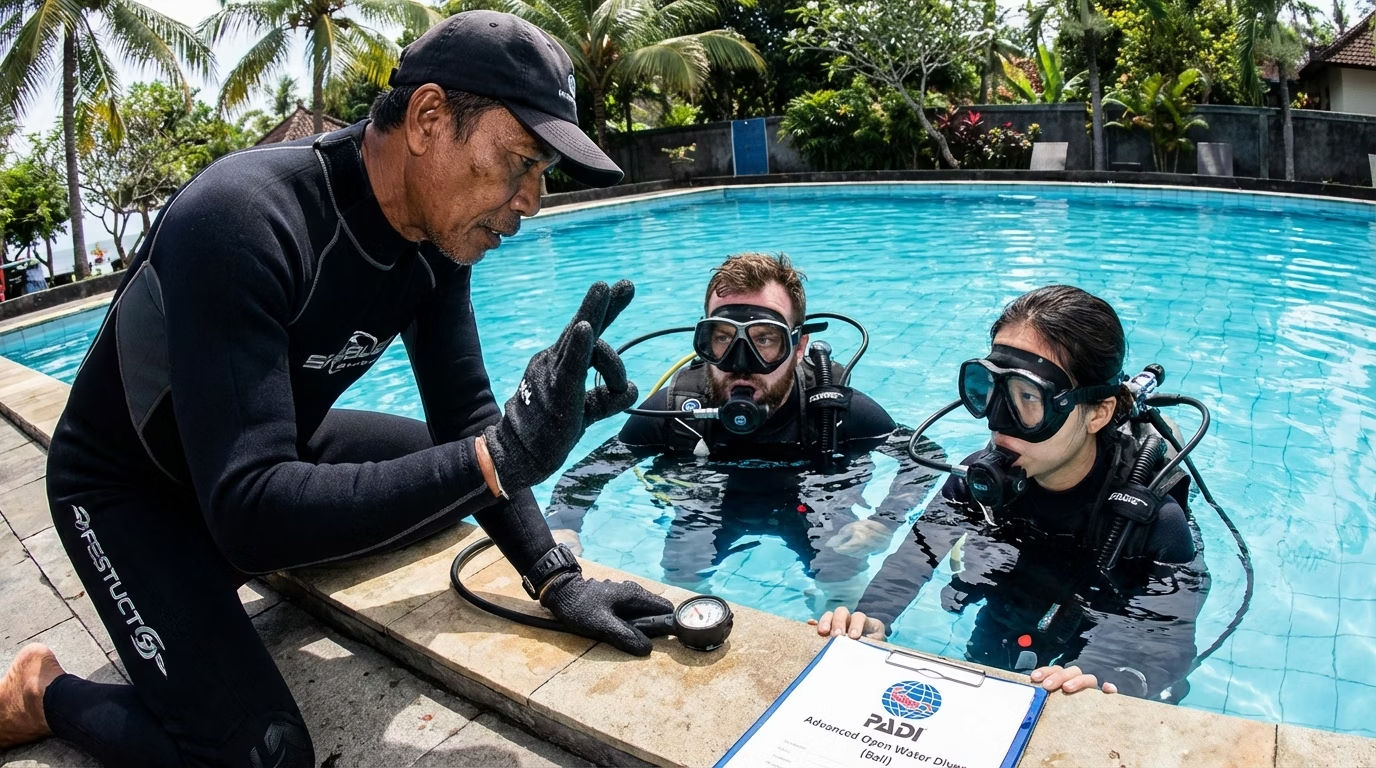
Open Water or equivalent; also commonly used under direct professional supervision for training and introductory dives

Local guide recommended

Explore with a local guide familiar with the site and its entry and exit points.

Diving conditions & best time to visit

Water temperature
22–29 °C
Visibility
5–20 m

Usually sheltered with little current, but light surge and reduced visibility can occur when swell enters the bay.

Best months to dive

Year-round when the bay is settled; April–November often provides drier-weather windows

The protected setting can be used throughout the year, but swell, rain, visibility and boat activity vary. The operator confirms whether conditions suit training, snorkeling or a night dive.

Conditions may change

Typical conditions can vary on the day of your dive. Confirm current conditions with the dive team before entering the water.

Marine life & activities

  • Coral bommies with damselfish, angelfish, butterflyfish and parrotfish
  • Frogfish, nudibranchs and small crustaceans
  • Moray eels, lionfish and scorpionfish
  • Octopus, squid and cuttlefish
  • Occasional stingrays or juvenile eagle rays
Snorkeling Freediving Night diving

Access & safety

Entry & Exit

Use the operator’s selected boat-entry point and descend close to the guide. Stay clear of pontoons, snorkel groups, mooring lines and moving boats.

Boat departure point
Local Nusa Lembongan dive centre or Jungut Batu boat departure
Boat travel time
3–5 min

Safety notes

Although generally sheltered, swell can create surge and reduce visibility. Pontoons, mooring lines, snorkel groups and local boat traffic require disciplined group control and surface procedures. Training and night dives should proceed only when the operator confirms suitable conditions.

Dive tips

  • Check swell and visibility before committing to the site.
  • Keep excellent buoyancy over sand so the group does not create a silt cloud.
  • Maintain awareness of pontoons, moorings, snorkelers and boat traffic.
  • Use the shallow profile for careful weighting, buoyancy and equipment checks.
  • Follow the guide’s entry, exit and surface-marker procedures.

Underwater photography

Macro and close-focus wide-angle equipment both work around the bommies. Move slowly over sand to avoid reducing visibility, keep clear of training groups and pontoons, and do not touch or reposition small marine life.

Site map & location

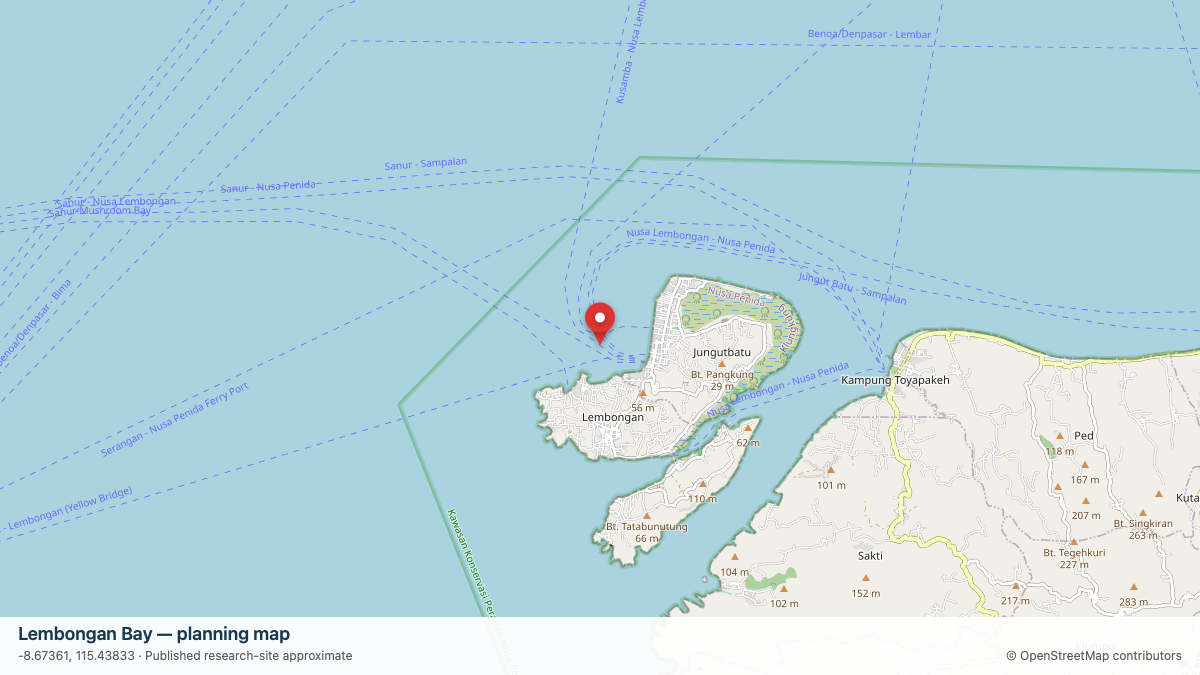
Lembongan Bay dive site planning map

Bali Diving

One of Southeast Asia's top dive destinations.

Bali is internationally recognised for its rich marine biodiversity and variety of dive environments. From coral reefs to wrecks and unique underwater landscapes, the island attracts divers from around the world looking for memorable and diverse diving experiences.

START YOUR DIVING NOW