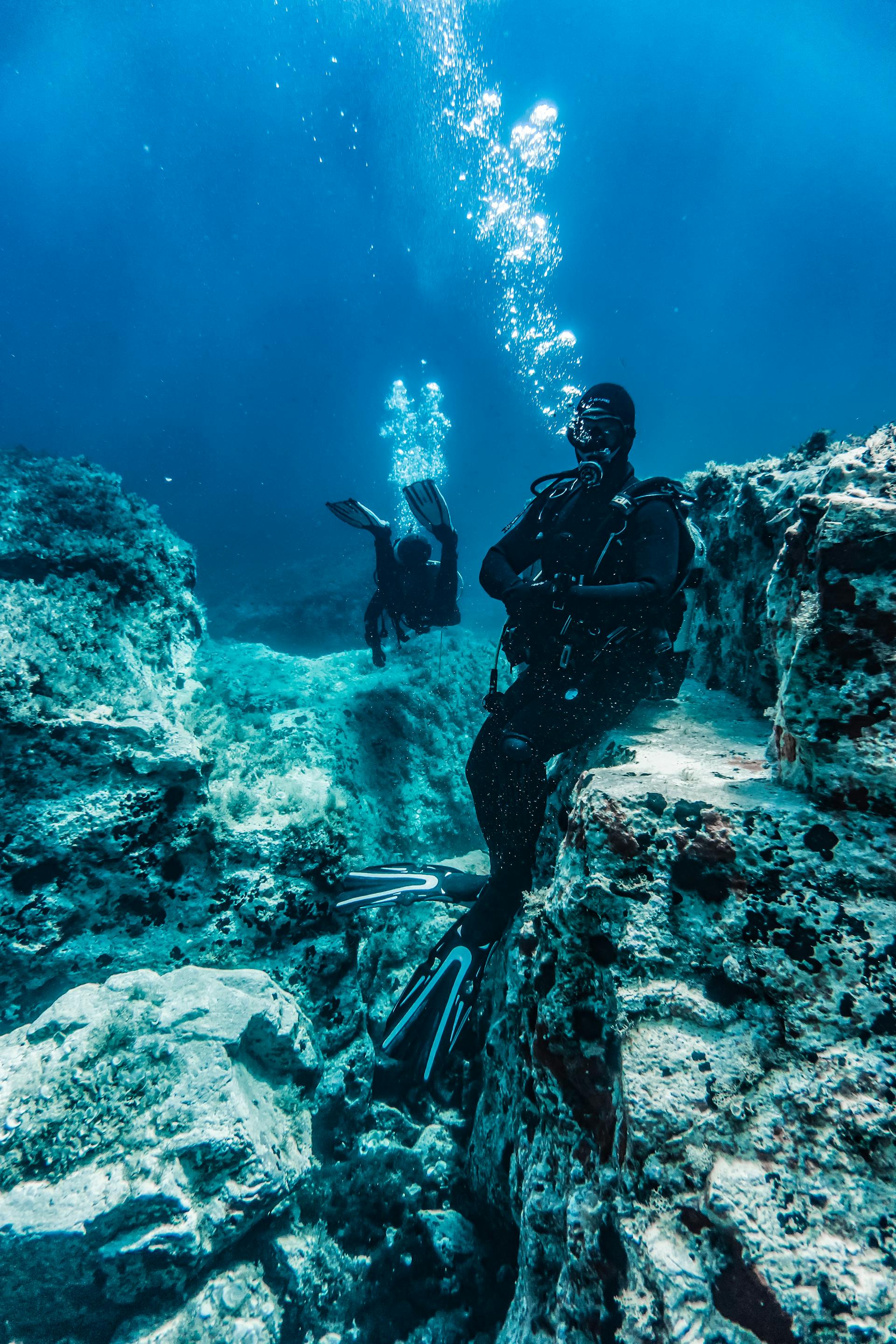
 Check availability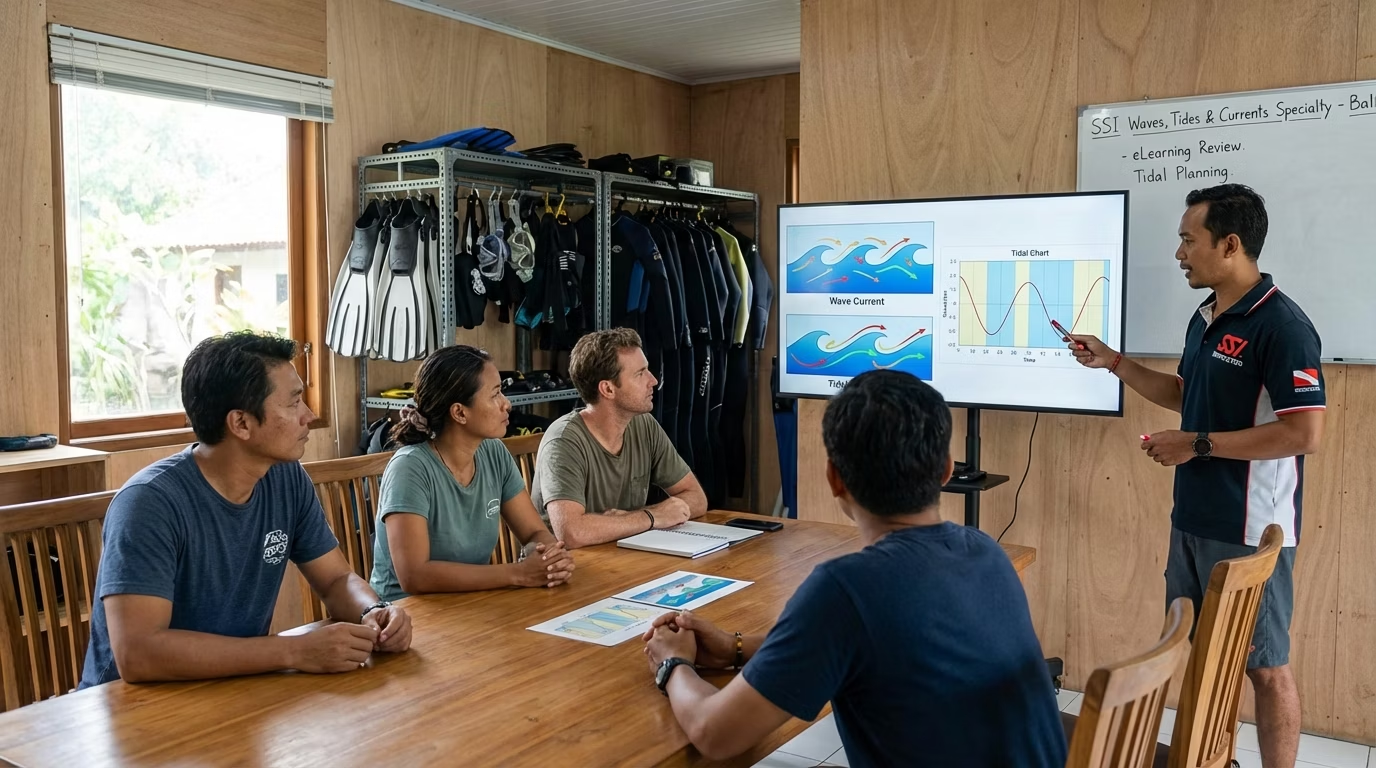
SSI Waves, Tides and Currents Specialty (Bali)
SSI Waves, Tides and Currents Specialty in Tulamben, Bali. Understand waves, tides & currents—plan safer dives, improve entries/exits, and stay in…
Nusa Lembongan
Advanced drift dive, wall dive, steep reef slope and pelagic dive; prior strong-current and drift-diving experience required.
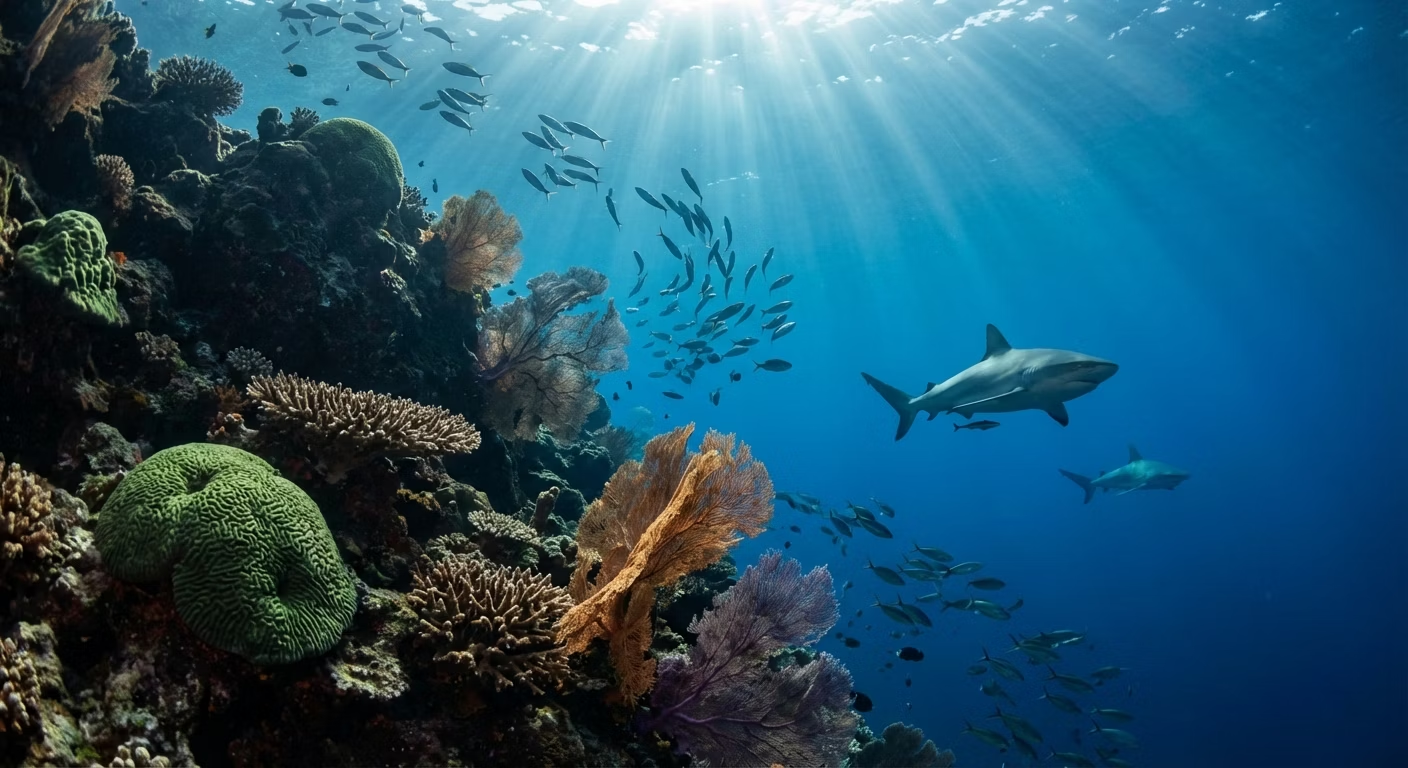
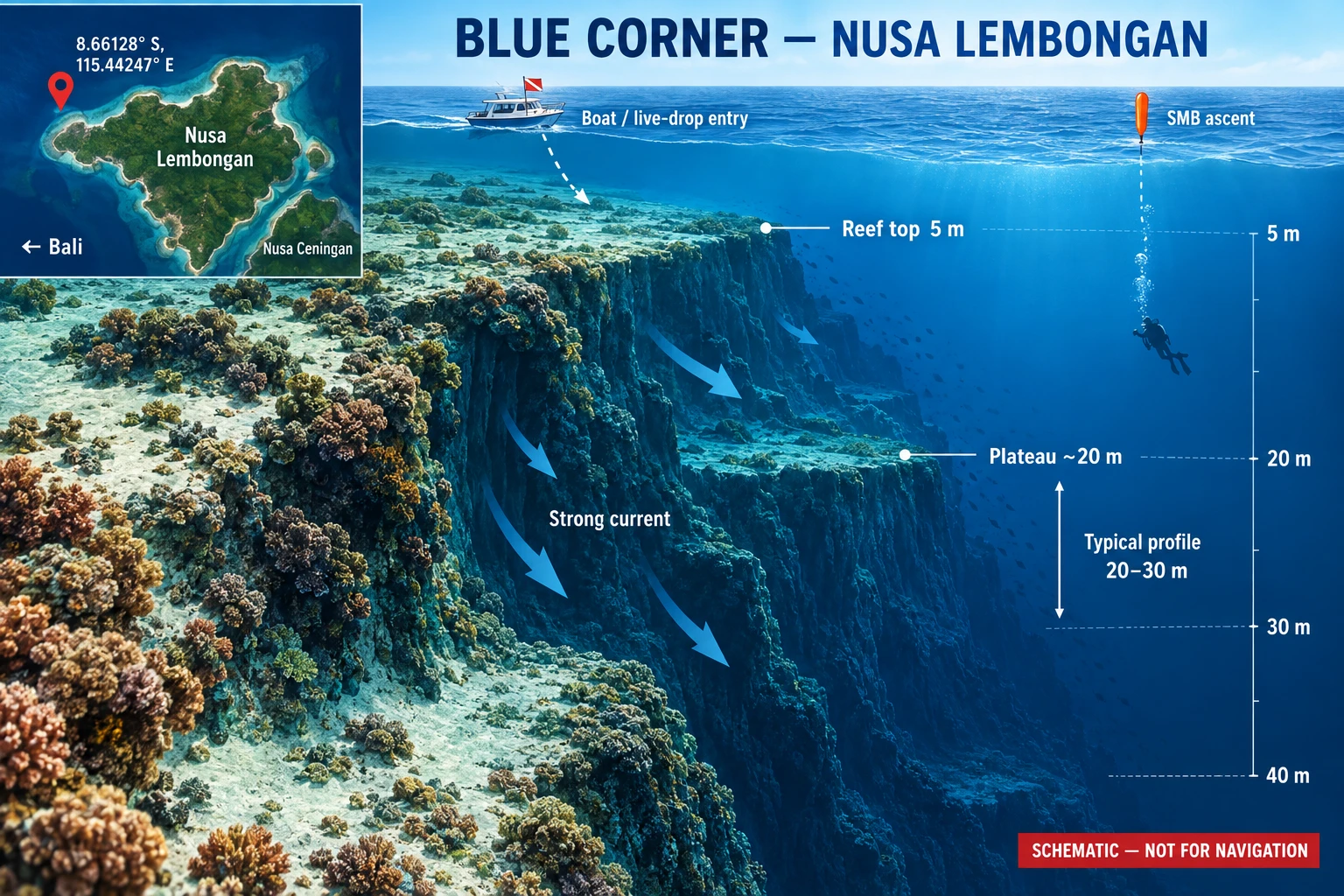
Blue Corner lies off the northwestern tip of Nusa Lembongan and is one of Bali’s most demanding drift dives. The site combines a shallow reef top, a steep coral slope and a wall that descends beyond recreational limits. Most dive profiles follow the reef edge around 20–30 m, where strong ocean current creates an exciting, fast-moving dive.
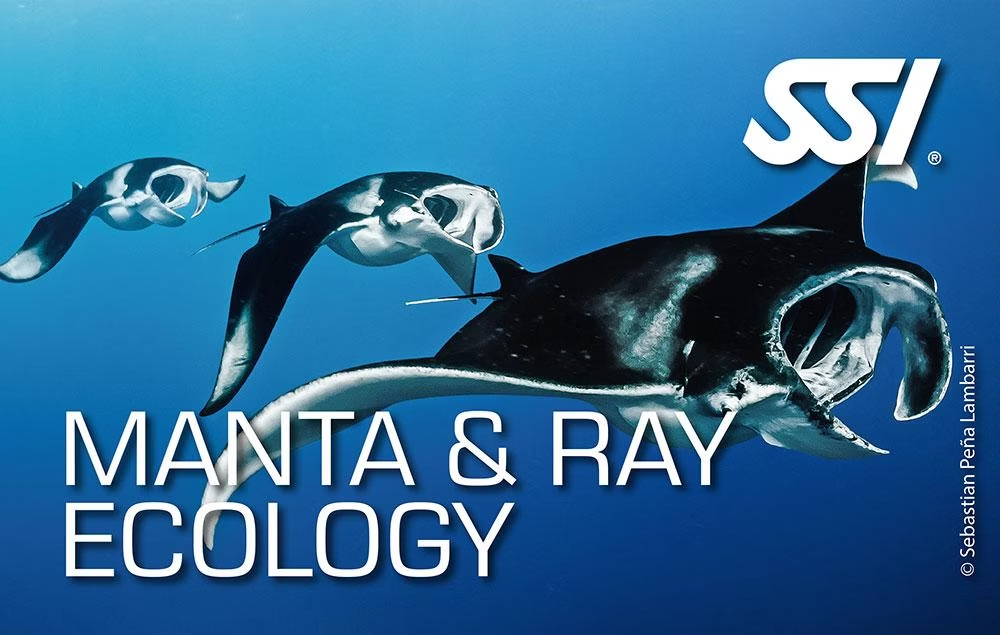
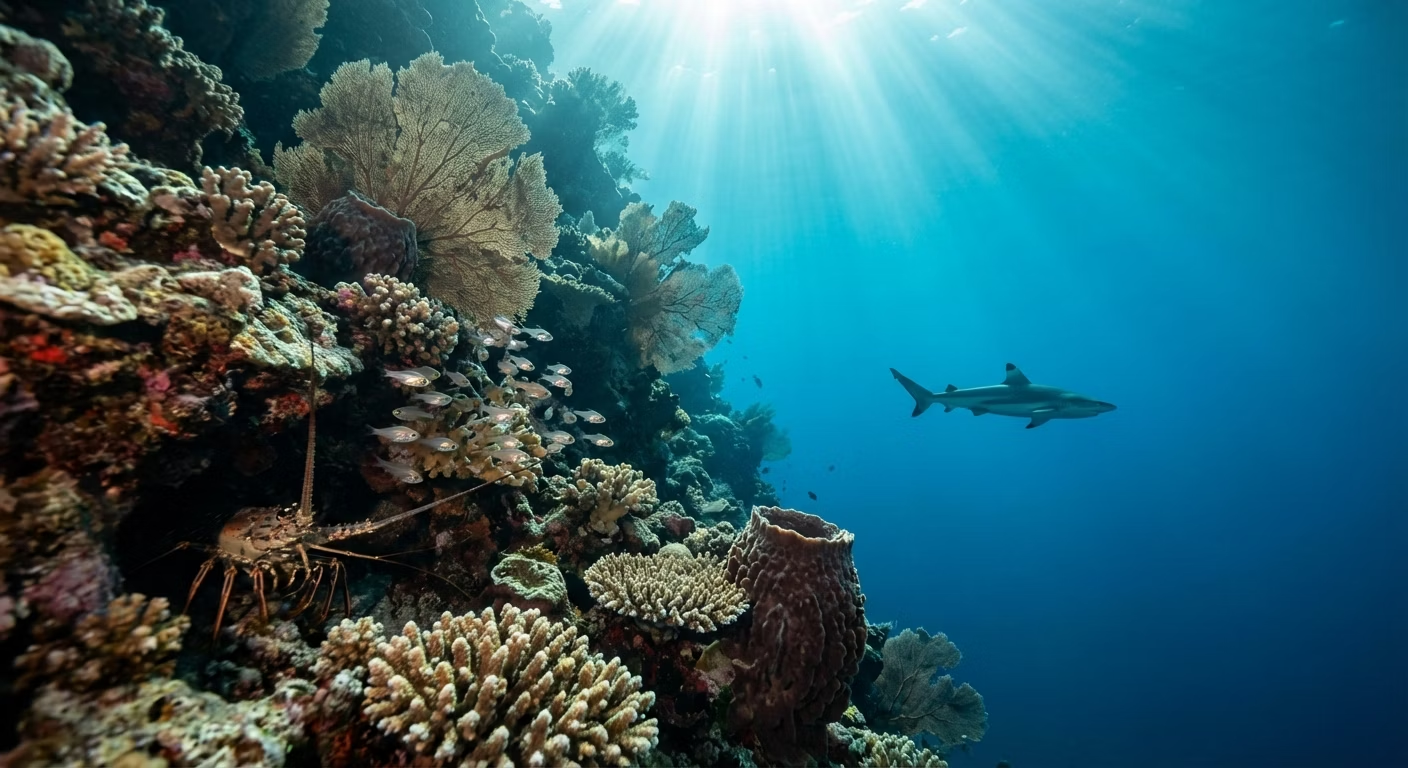
The current attracts schooling fish and large pelagic species, with possible encounters including giant trevally, tuna, barracuda, large rays, reef sharks and seasonal mola mola. Sea turtles, moray eels, lobsters, sea fans and healthy soft and hard corals add interest along the wall and plateau. Conditions vary considerably with tide and upwelling, so the site is reserved for advanced divers with drift and strong-current experience.
Conditions-dependent dive. Operation is subject to tide, current, swell, weather and diver-experience checks; the guide may change or cancel the site for safety.
Advanced Open Water or equivalent, with recent drift-diving and strong-current experience; excellent buoyancy, gas-management and SMB skills required.
Explore with a local guide familiar with the site and its entry and exit points.
Strong to very strong, sometimes unpredictable ocean current. Usually conducted as a drift dive; current direction, surface swell and cold thermoclines vary with tide and season.
Cool, nutrient-rich upwelling is most pronounced from July to October. Thermoclines may lower the temperature sharply and improve the chance of mola mola encounters, but sightings remain seasonal and unpredictable. Tide, swell and current determine whether the site can be safely dived on any given day.
Typical conditions can vary on the day of your dive. Confirm current conditions with the dive team before entering the water.
Boat entry at a live-drop point selected for the tide. A negative entry is commonly used when current is running: enter together, descend promptly and regroup at the reef under the guide’s direction.
Powerful and sometimes unpredictable current is the principal hazard. Direction and strength can change with the tide, with potential downcurrent or separation into open water. The steep slope drops beyond 40 m, while cold thermoclines can increase gas consumption. This site is unsuitable for inexperienced divers and should only be attempted with a qualified local guide after a current and weather assessment.
Wide-angle equipment suits the wall, reef scenery, schooling fish and large pelagics. Keep the camera rig compact and secured in strong current, prepare settings before entry, use a fast shutter speed for moving subjects and keep photography secondary to depth, gas, buoyancy and team awareness. Do not chase or crowd mola mola, rays, sharks or turtles.
SSI Waves, Tides and Currents Specialty in Tulamben, Bali. Understand waves, tides & currents—plan safer dives, improve entries/exits, and stay in…
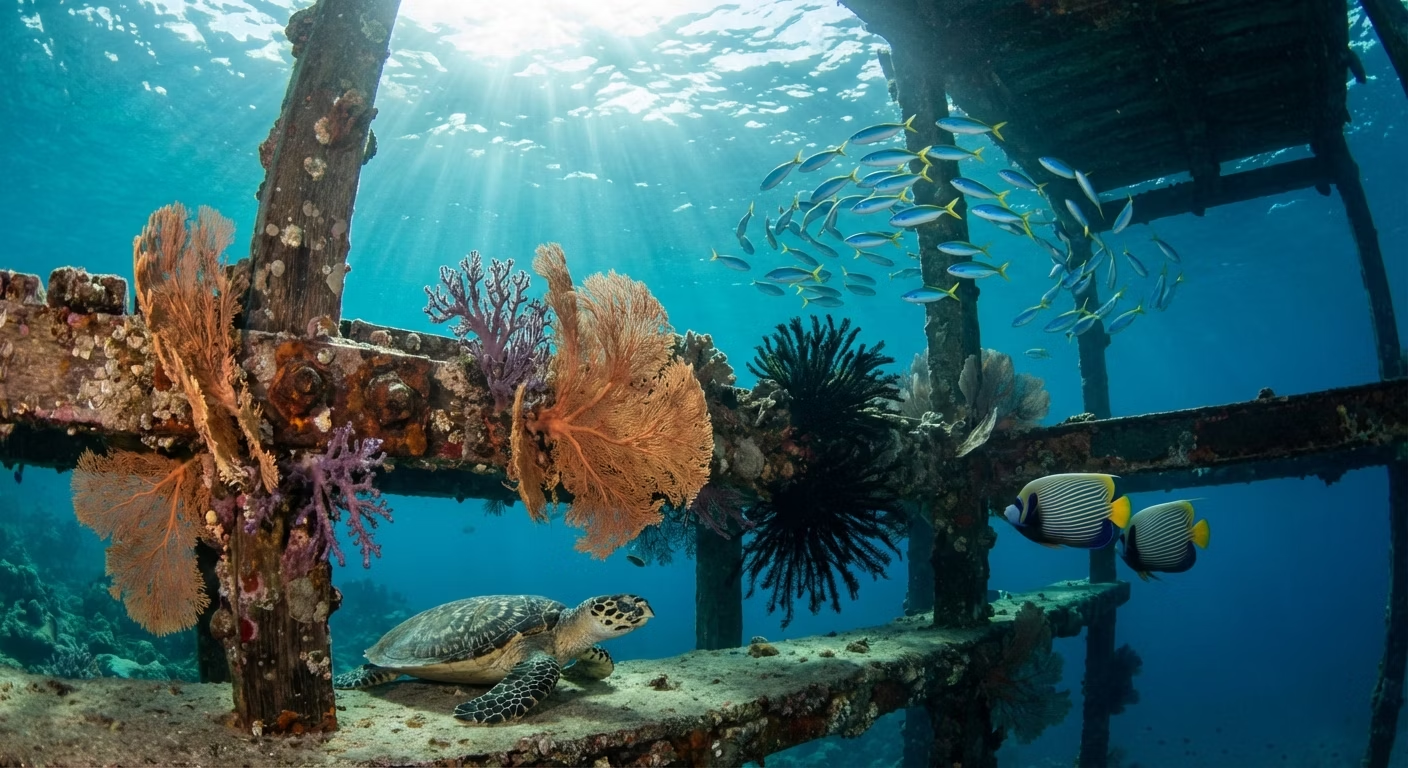
Bounty Wreck is a artificial reef, collapsed jetty, coral reef dive in Southwest Gili Meno, with a working depth range of approximately 8–25 m. The site is known for glassfish, frogfish, seahorses, batfish, and turtles. Conditions remain variable, so the route, maximum depth and suitability are confirmed by the local guide on the day.
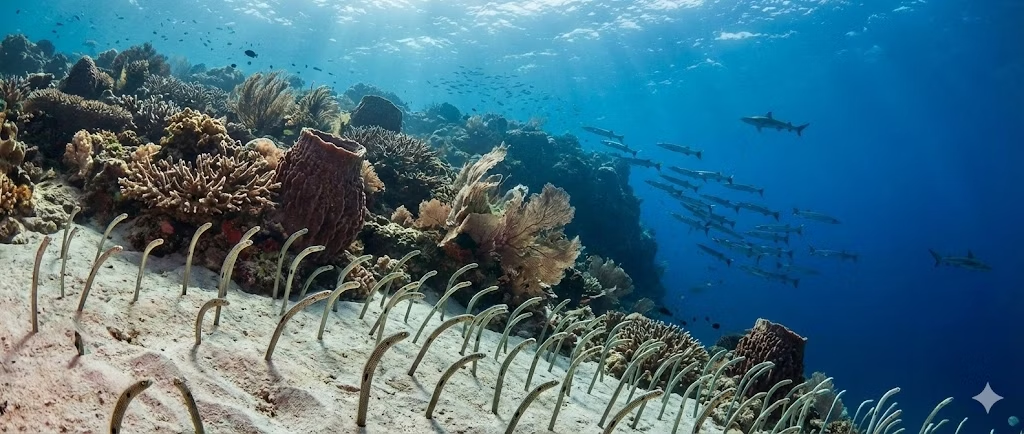
Bunutan is a drift, coral slope, reef dive in Amed, with a working depth range of approximately 5–30 m. The site is known for garden eels, barrel sponges, moray eels, stingrays, and trevally. Conditions remain variable, so the route, maximum depth and suitability are confirmed by the local guide on the day.
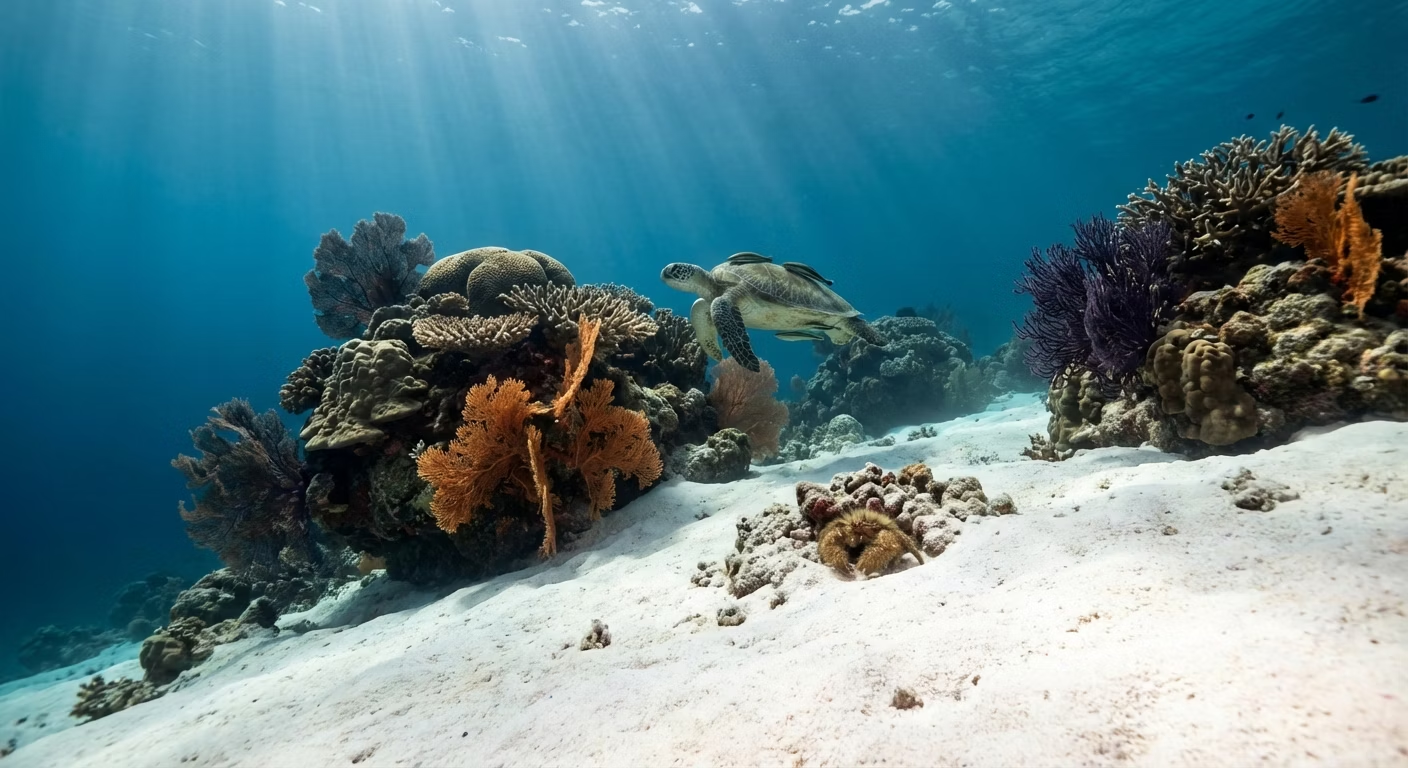
White Sand Beach is a white-sand bay, coral bommies, reef slope dive in Padang Bai, with a working depth range of approximately 5–40 m. The site is known for soft corals, hard-coral bommies, turtles, stingrays, and lobsters. Conditions remain variable, so the route, maximum depth and suitability are confirmed by the local guide on the day.
Gili Meno Wall is a wall, coral ledges, macro dive in West Gili Meno, with a working depth range of approximately 5–18 m. The site is known for nudibranchs, crustaceans, lionfish, moray eels, and turtles. Conditions remain variable, so the route, maximum depth and suitability are confirmed by the local guide on the day.
Bali Diving
Bali is internationally recognised for its rich marine biodiversity and variety of dive environments. From coral reefs to wrecks and unique underwater landscapes, the island attracts divers from around the world looking for memorable and diverse diving experiences.